
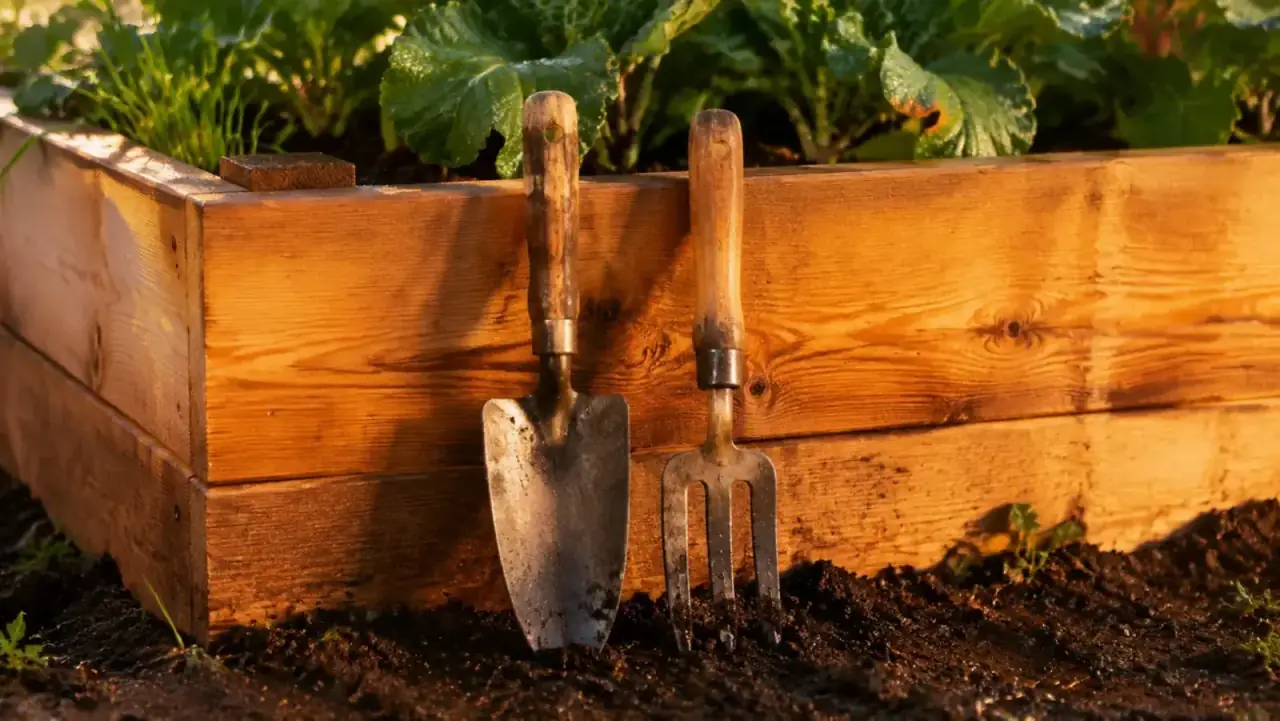
If you are trying to decide between a cordless electric cultivator and a traditional manual claw tiller, the short answer is this: the manual tiller costs less up front and works fine if your beds are small, your soil is already loose, and your back cooperates. The Alloyman 20V is the better tool for everyone else. I have used both in the same three 4x8 raised beds over a full season, starting with a manual four-prong claw on a 48-inch handle and switching to the Alloyman partway through. The difference in effort was not subtle.
This comparison is not about bashing cheap tools. A manual cultivator is genuinely useful for a few jobs. But there are real gaps between the two in tine depth, physical effort over time, and how each handles compacted or amended soil, and those gaps matter once your beds are more than two or three seasons old.
| Alloyman 20V Cordless Tiller | Manual Claw Cultivator | |
|---|---|---|
| Power source | 20V lithium-ion battery (included) | Human muscle, no battery needed |
| Motor speed | 360 RPM rotating tines | 0 RPM, push-and-twist only |
| Tine working width | Approx. 6 inches | Approx. 4 inches (4-prong head) |
| Effective tilling depth | 5-6 inches in loamy soil | 2-3 inches before effort spikes |
| Weight | 7.7 lbs with battery | 1.5-2.5 lbs depending on handle |
| Battery run time | Approx. 25-35 min per charge | Unlimited (no battery) |
| Price range | Mid-range, battery included | Budget to mid-range at most garden centers |
| Best soil condition | Fresh, amended, or compacted raised-bed soil | Pre-loosened or freshly amended soil only |
| Physical fatigue on a 4x8 bed | Low; wrists and shoulders stay relaxed | High in compacted soil; forearms and lower back take it |
Where the Alloyman 20V Wins
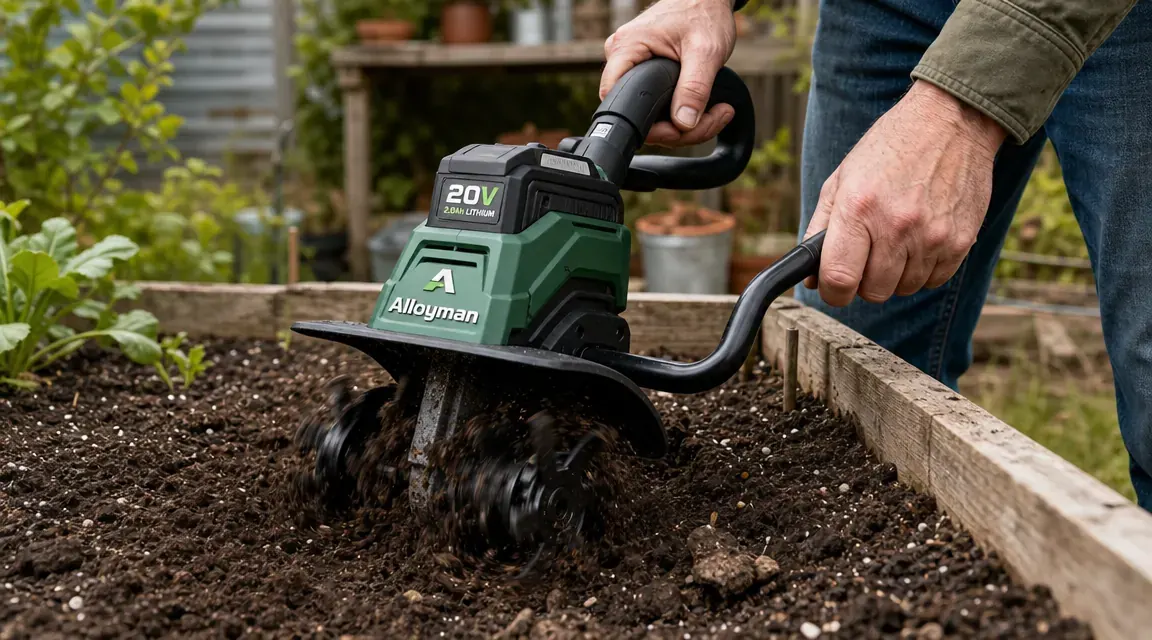
The biggest advantage is tine depth without proportional effort. The Alloyman's 360 RPM motor drives the tines down 5 to 6 inches in loamy raised-bed mix without you leaning your body weight into it. I tilled all three of my 4x8 beds after a winter of compaction in about 22 minutes, battery still showing two out of three bars. The same job with the manual claw last spring took nearly an hour and left my forearms sore the next day. Compacted soil and clay-heavy mixes are where the power difference is most obvious. The manual claw skips off the surface and exhausts you before it actually breaks things up.
The Alloyman also handles the transition from one season to the next more gracefully. In the fall, I work in a top-dressing of compost and the cultivator mixes it into the top 5 inches evenly. The manual tiller just scratched the surface and left visible pockets of compost that never got incorporated. That even mixing matters for root development in the spring, especially in beds where I grow root vegetables like carrots and radishes. The cordless format also means no extension cord to manage across multiple beds and no gas or oil.
Where the Manual Tiller Wins
In freshly amended soil, a good manual claw cultivator is actually fast. If you have just added a bag of compost to a bed that already had decent structure, you can work it in with a claw in five minutes flat. The claw is also lighter by about 5 pounds, which matters if you have wrist or grip issues that make holding the Alloyman steady for a full bed a challenge. And because there is no motor or battery, there is genuinely nothing to maintain. My manual claw has been in the shed for three years without a single issue.
The price gap is real too. A decent manual claw is affordable. If you have one raised bed that you tend occasionally and the soil is already in good shape from prior seasons, spending significantly more on a cordless cultivator is hard to justify on a pure cost-per-use basis. The manual tiller earns its spot as a secondary tool even in a garden that has the Alloyman, because it is useful for tight spots near the sides of the bed where the wider tine head on the electric cannot reach.
Your soil is already telling you what it needs. The Alloyman gets it there in 20 minutes.
The Alloyman 20V Cordless Tiller Cultivator includes a battery and charger, so you are ready to work on the first charge. Rated 4.5 stars across over 1,200 reviews from home gardeners. Check today's price on Amazon before spring prep season drives inventory down.
Amazon Check Today's Price on Amazon →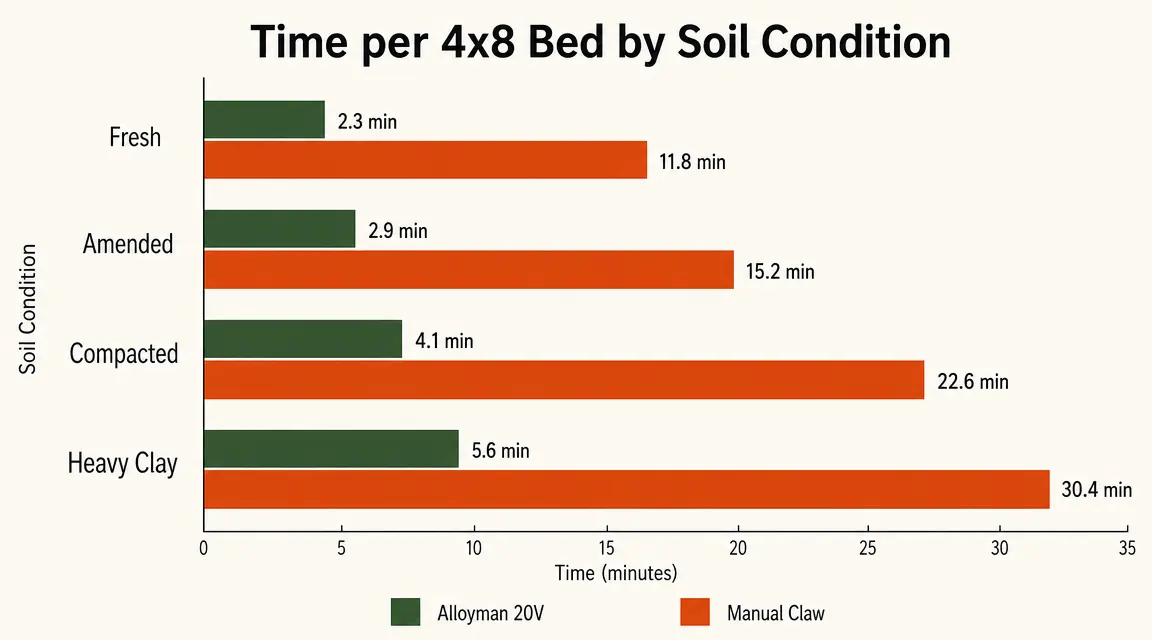
Battery Life: The Honest Numbers
The Alloyman comes with a 20V 2Ah battery. In practice, that gets me through three 4x8 beds on a single charge if the soil is reasonably loose, or one to two beds if I am working clay-heavy or heavily compacted ground. The charger brings it back in about an hour, which is fast enough that I rarely feel the wait. That said, if you have a large garden with six or more full-size beds or a longer in-ground row setup, plan on having a second battery or breaking your work across two sessions. The battery is a standard 20V platform and compatible with other Alloyman tools if you expand.
Three raised beds, start to finish, 22 minutes. That same job took me close to an hour with the manual claw last spring, and my forearms ached by noon.
Depth and Tine Design: Why It Matters for Raised Beds
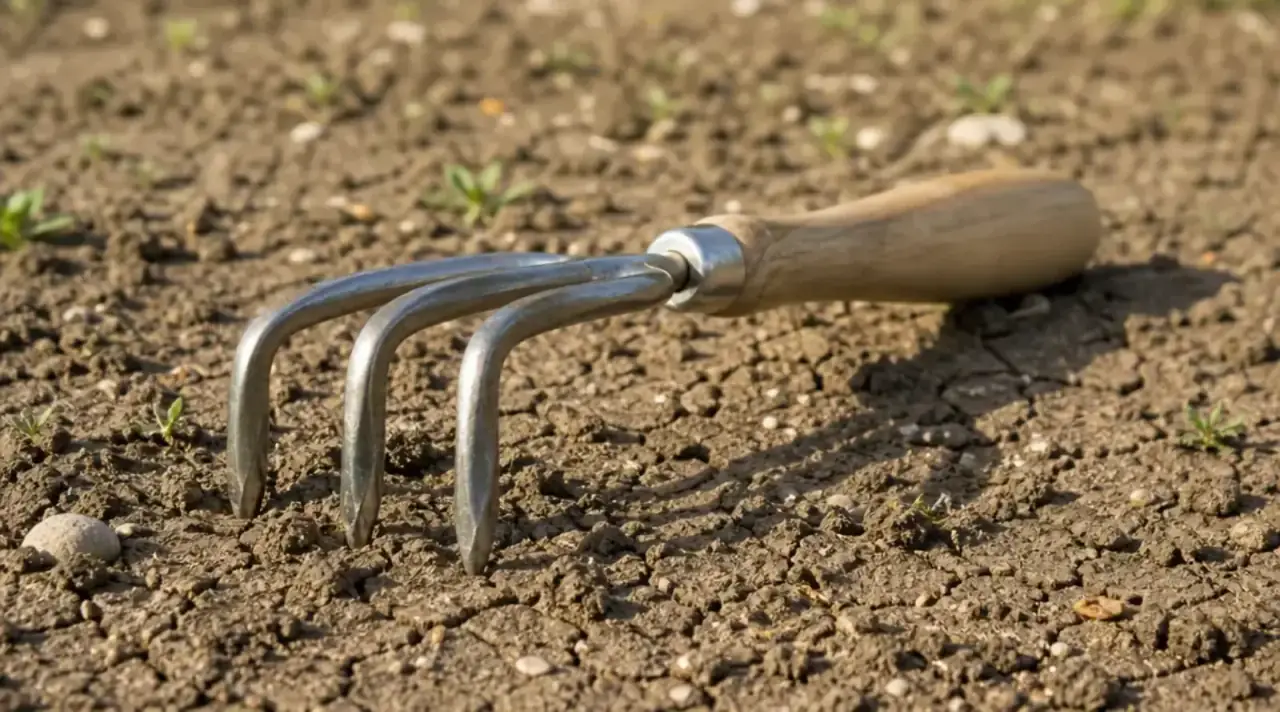
Most home gardeners think of tilling depth as a minor detail. It is not. Carrot seedlings need 6 inches of loose, stone-free soil to grow straight. Compaction from foot traffic or simply the settling of soil over a winter creates a hardpan layer an inch or two below the surface. A manual claw that only reaches 2 to 3 inches before you are straining never breaks that layer. The Alloyman's powered tines push through it. I added a soil probe to my beds after switching and measured looser structure 5 inches down in the beds I had cultivated with the Alloyman versus only about 2 inches in a control bed I had worked with the manual claw.
The tine width on the Alloyman (about 6 inches) covers ground faster than the typical 4-inch manual claw head, but it does mean you cannot get as close to bed-edging boards without the edge tines catching. I leave about a 3-inch strip along the wall of the bed and finish that section with the manual claw. It adds two minutes per bed and is worth it to avoid damaging the tines.
Who Should Buy Which
Buy the Alloyman 20V if you have two or more raised beds, if your soil has any compaction from prior seasons, if you are working compost or amendments into existing soil regularly, or if you have had any fatigue or strain issues using a hand tool for extended periods. The price is real but the time and physical cost savings add up fast once you have more than one bed. I recovered the cost in time savings alone in a single spring prep session. Buy a manual claw cultivator if you have one small raised bed with consistently loose, pre-amended soil, if you are using it as a secondary tool for tight corners, or if you simply want to keep a light, low-maintenance option in the shed for quick surface scratching between plantings.
If you have more than one bed and your soil is not already perfectly loose, the Alloyman pays for itself in one season of prep.
The Alloyman 20V Cordless Tiller Cultivator works in raised beds, in-ground rows, and container gardens. Battery included. No gas, no cords. See current pricing and availability on Amazon now.
Amazon Check Today's Price on Amazon →