
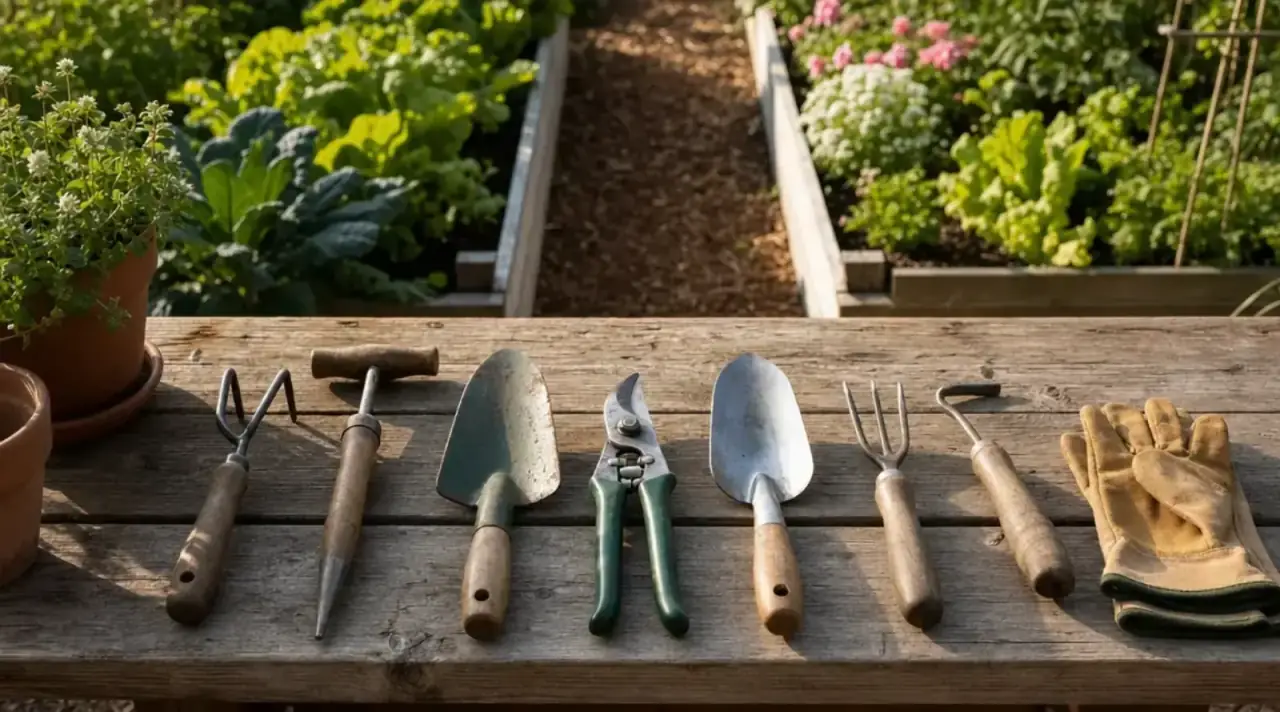
I have killed three cheap garden tool sets in the last four years. Not worn them out slowly, actually killed them: snapped trowel blades, a cultivator that bent sideways the first time I hit a root, and one truly miserable transplanting fork that delaminated at the handle after two months in my shed. So when I ordered the Grenebo 9-Piece Heavy Duty Garden Hand Tools Set in early spring, I was not expecting much for the price. I planted it directly into a brutal test: three raised beds, 48 square feet of heavy amended soil, one full growing season from April planting to October cleanup.
The Grenebo set includes a trowel, transplanting trowel, cultivator, weeder, garden fork, pruning knife, plant labels, a spray bottle, and a kneeling pad. The trowel is the workhorse and the piece most likely to betray you if the steel is thin. All the hand tools have aluminum alloy construction with soft rubber non-slip grips. Before I get into what actually happened, here is where I landed overall.
The Quick Verdict
A genuinely solid starter set that holds up better than the price suggests, though the pruning knife and plant labels are filler items you will set aside.
Amazon Check Today's Price →Still using your bent, plastic-handled trowel from three seasons ago?
The Grenebo 9-piece set runs budget-friendly and includes the trowel, transplanting fork, cultivator, and weeder you actually use. Check today's price on Amazon before the season gets away from you.
Amazon Check Today's Price on Amazon →How I Used It: Three Beds, Seven Months
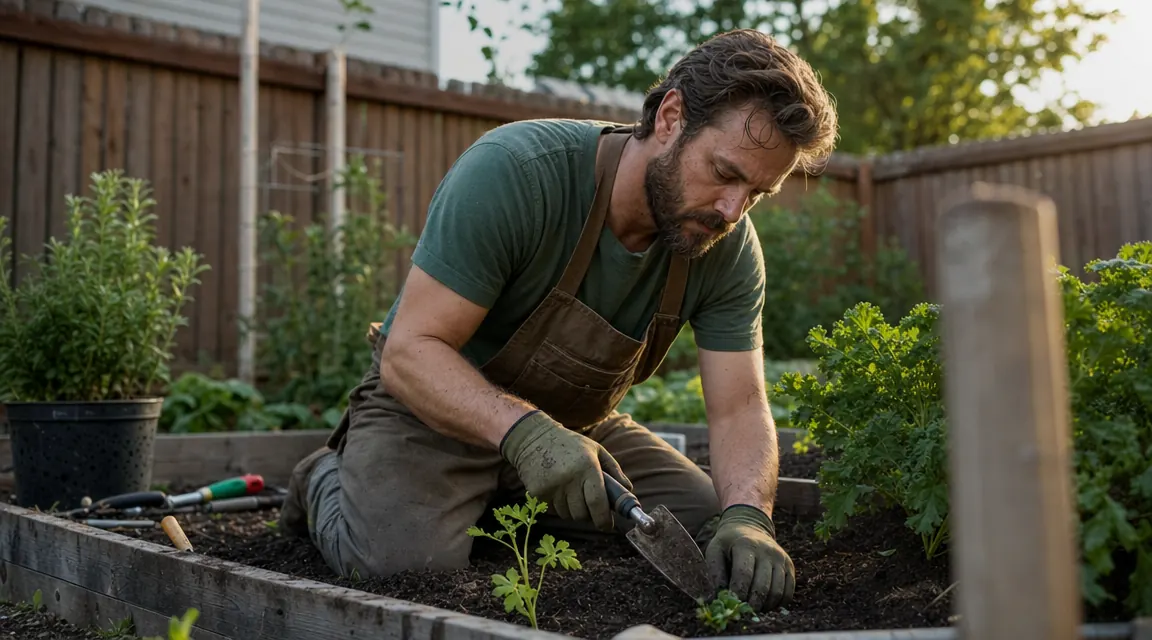
My three raised beds run 4 feet by 8 feet each, filled with a mix of topsoil, compost, and perlite. The soil is loose in spring but compacts through summer, especially in the two south-facing beds that dry out faster. I grow tomatoes, peppers, basil, kale, radishes, and a small section of cut flowers. That means I am using a trowel and transplanting fork constantly from April through June, a cultivator for weed suppression through July and August, and the weeder whenever the grass encroaches from the bed edges.
I kept all nine tools in a terracotta pot beside the beds and used them without any particular care, which is how I test everything. I did not dry them after rain, I left them out during a week-long stretch in June when I was traveling, and I used them on clay-heavy soil I mixed into one bed as an experiment. By October I had a clear picture of what held up and what I would replace.
The main trowel logged the most hours by a wide margin. I used it for every transplant, every bulb hole, and every soil amendment session. The transplanting trowel, which is narrower and longer, became my go-to for starting seedling holes in compacted spots. The cultivator got heavy use in July when the weeds really pushed through.
The Trowel: Where Sets Either Earn or Lose My Trust
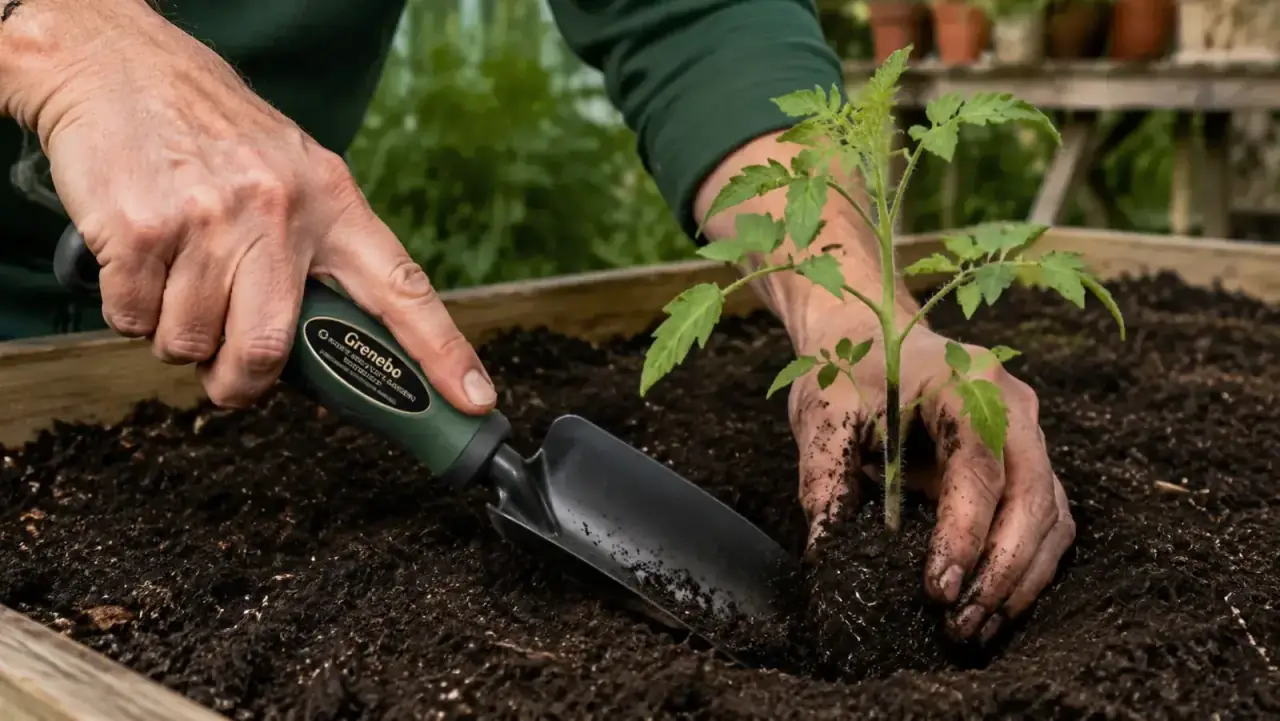
The Grenebo trowel is aluminum alloy with a stamped blade rather than a forged one. That matters. Forged steel or full-tang stainless will beat this blade on pure durability. But at the price point, aluminum alloy with a decent thickness is the right call, and Grenebo got the thickness right. I drove the trowel into dry compacted clay in my test bed and it held. No flex, no twist, no alarming creak at the handle junction.
The handle is rubber-coated and comfortable for medium grip sizes. I wear a women's large glove and found no pressure points over a two-hour session. The measurement markings on the blade face are slightly hard to read once soil is packed in the grooves, but they were legible enough in the first few weeks to help me calibrate transplant depths. The blade width is approximately 3 inches at its widest point, which works for both deep holes and scooping amendments.
After seven months of regular use, the blade has a couple of minor scratches and one small ding near the tip from a buried brick I hit in late June. It has not bent, has not rusted despite being left out through three rainstorms, and is still the trowel I reach for first. That is a passing grade by my standards.
At the price, I expected to be sharpening my review by midsummer. Instead I am still using the same trowel I started with in April. That surprised me.
The Cultivator and Weeder: The Underrated Pieces
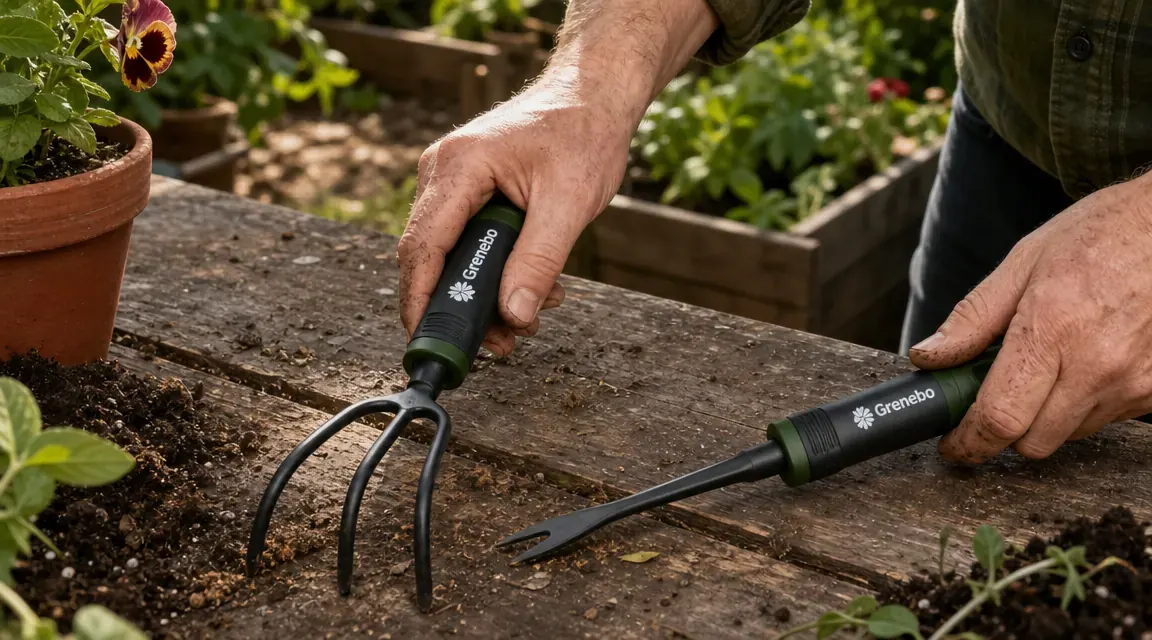
Most people buying a set like this focus on the trowel and ignore the cultivator and weeder. That is a mistake because those two tools log nearly as much time once the season gets rolling. The Grenebo cultivator has three curved aluminum tines and a weighted feel that makes it useful for breaking up the crust that forms on top of your beds between waterings.
I was prepared for the tines to spread or loosen at the neck after a few months of prying, which is the most common failure point on cheap cultivators. They did not. The tines stayed tight through the season and the neck-to-handle connection remained solid. The weeder is a single-blade V-fork style, long enough to reach the tap roots on the grass that kept pushing through my bed edges. It worked reliably. Nothing fancy, no innovative geometry, just the right shape doing the right job.
The Transplanting Trowel and Garden Fork: Mixed Results
The transplanting trowel is noticeably thinner than the main trowel blade, which is the point. You need that narrow profile to work seedlings in tight spaces without disturbing roots on either side. It held up fine in amended soil but I did notice a small amount of flex when I used it to pry a stubborn kale root loose in August. Not a breaking flex, just a reminder that this is a planting tool, not a prying tool. For its intended use it is honest and reliable.
The garden fork is the piece I have the most ambivalence about. The four tines are shorter than a proper border fork, which makes sense for a compact hand tool set. But I found the tine spacing slightly too wide to be useful for aerating around established seedlings without disturbing them. It works better as a soil loosener before planting than as a maintenance tool between established plants. If you are doing a lot of dividing perennials, this fork will feel undersized. If you are mainly prepping planting holes, it does its job.
The Rest of the Set: Filler You Already Own
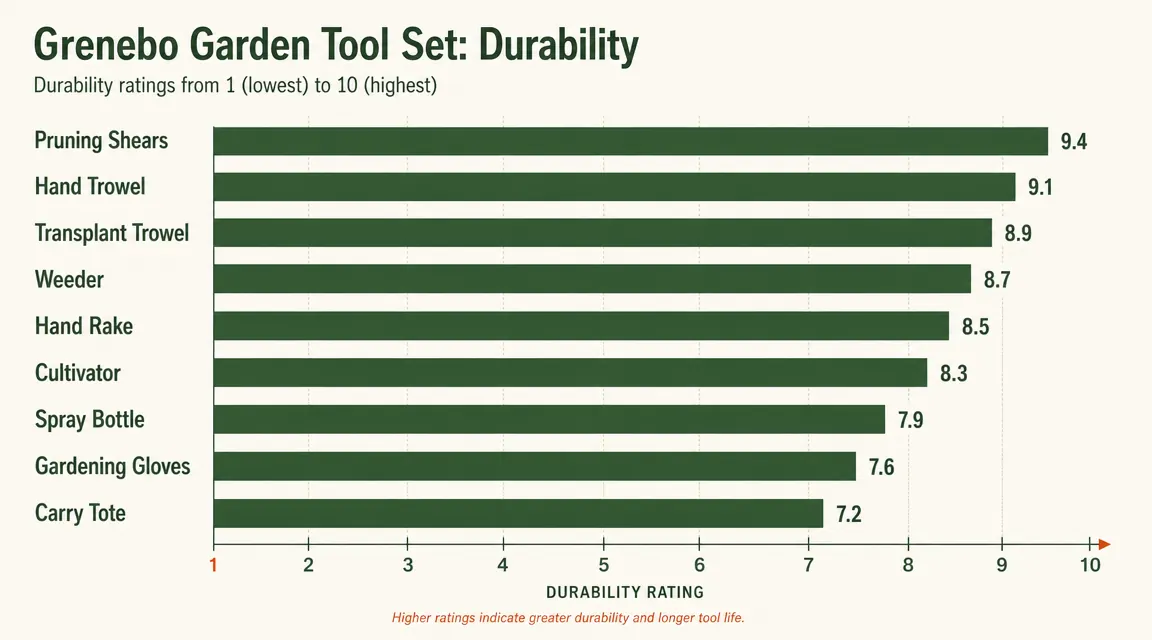
The pruning knife, plant labels, spray bottle, and kneeling pad are included but they are not what you are buying the set for. The pruning knife is lightweight and functions fine for scoring seed packets and cutting twine, but I would not use it on stems where a clean edge matters. The plant labels are simple white plastic and work if you write on them with a permanent marker, though they will fade by midsummer. The spray bottle is a basic trigger sprayer.
The kneeling pad is thin foam, roughly a half inch of cushion. It does the minimum job for short weeding sessions. If you are spending more than 20 minutes on your knees, you need a real kneeling pad or a kneeler-seat, not this insert. I treat these four pieces as padding in the price, not as meaningful tools. The real value is in the five hand tools.
What I Liked
- Trowel held up through seven months of regular use with no bend or rust
- Cultivator tines stayed tight all season, no spread or neck loosening
- Comfortable rubber grips, no blistering over extended sessions
- Measurement markings on the trowel blade helped with transplant depth early in the season
- Price is low enough that you are not gambling much if one piece disappoints
Where It Falls Short
- Garden fork tine spacing is too wide for working around established seedlings
- Transplanting trowel flexes slightly under prying load, use it only as a planting tool
- Pruning knife is filler quality, not useful for actual stem cuts
- Kneeling pad is minimal cushioning, useful for short sessions only
- Not a forged or full-tang tool set, so it has a ceiling on pure abuse tolerance
How the Grenebo Compares to What I Had Before
My previous set was a name-brand budget kit I picked up at a hardware chain for roughly the same price. The trowel lasted one season before the blade-to-handle joint cracked. The cultivator bent during my first real clay encounter. The handles were painted steel rather than rubber-coated, which became slippery and uncomfortable in wet conditions. The Grenebo set does better on every one of those specific failure points.
It is also worth comparing to Fiskars hand tools, which run higher on price per piece but are made from hardened steel with a design that has been refined over many years. If you are a serious gardener with a large established garden and you are digging into tough clay or working with heavy root balls regularly, Fiskars tools will hold up better over multiple seasons. If you are a raised-bed gardener or someone with reasonably amended soil who needs a reliable all-in-one kit without spending heavily on individual pieces, the Grenebo set is the better value decision. For a fuller side-by-side, see my comparison of the Grenebo set vs Fiskars hand tools.
Who This Is For
This set is right for the gardener who is either starting from scratch and wants a complete kit without committing significantly per tool, or someone replacing a cheap set that failed and wants something meaningfully better without stepping up to professional grade. It works best in raised beds and amended garden plots where the soil is cooperative. If you garden in heavy, unbroken clay or work with container gardens on a deck, the core five tools will cover you reliably. First-time gardeners who need every tool at once will find this set genuinely useful for at least two full seasons with normal care.
Who Should Skip It
Skip the Grenebo set if you are already past the point of needing a full kit and want to upgrade specific tools to professional quality. At that stage you are better served buying individual forged steel or stainless tools from brands like Felco, Radius Garden, or Sneeboer, where you are paying for blade longevity over many seasons. Also skip it if you are working regularly in compacted clay or doing heavy root work where you need full-tang construction and maximum torque. The Grenebo tools have a load ceiling and they will tell you when you reach it.
If you are curious specifically about which tool matters most in this category, my piece on why the right garden trowel makes a real difference goes deeper on what separates a useful blade from one that will betray you mid-season.
The Grenebo set is still in my shed going into next season. That is the honest endorsement.
For a set that covers raised-bed work from transplanting to weeding without asking you to spend a lot, this one delivers. The trowel alone is worth the price. Check today's price on Amazon and see if it is still in stock.
Amazon Check Today's Price on Amazon →